The Ministry of Public Health announced the publication for public consultation of the draft Resolution that establishes the implementation of the Front End Nutrition Warning Labeling (EFAN in Spanish). This Resolution aims to establish the placement of the Front End Nutrition Warning Labeling (EFAN), where the content of energy, sodium, sugars, total fat, saturated fat, trans fat and sweeteners must be declared in the nutrition labeling of prepackaged foods for human consumption.
This regulation will allow citizens to exercise their right to know the components of the food they consume, identify which are convenient for their health and make informed decisions. This right is also contemplated in the Constitution of the Republic.
Month: December 2024
Panama – Ministry of Health presents strategies for reducing obesity
The Ministry of Health (MINSA) has launched the “Acceleration Plan to Stop Obesity in Panama”, with the aim of reducing the prevalence of this disease in the country by 2030. The proposal was presented during a meeting with MINSA directors and advisors, and had the collaboration of the Pan American Health Organization.
Outstanding strategies include:
- Early feeding environment: Increase the prevalence of exclusive breastfeeding by 30% by 2030.
- Population education and awareness: Promote healthy eating habits through food guides, with a focus on food systems in 50% of the institutions that are part of the intersectoral commission.
- Contracting of public food services: Implement technical guidelines to offer healthy food in canteens of early childhood care centers.
- Food labeling: Promote front nutritional warning labeling in 50% of key actors by 2030.
- Physical activity: Develop a national plan to promote physical activity, recreation and sport in the population.
- Primary health care: Implement a guideline to promote physical activity through primary health care by 2026.
- Food marketing: Achieve that at least 15% of educational centers implement regulations on food advertising and promotion.

Article – Recall, understanding, use, and impact of front-of-package warning labels on ultra-processed foods: A qualitative study with mothers of preschool children in Peru
In its efforts to reduce increasing rates of obesity and nutrition-related noncommunicable diseases, Peru implemented front-of-package (FOP) warning labels (also called warnings) on processed and ultra-processed foods in June 2019. The goal was to inform consumers about high levels of sugars, saturated fats, sodium, and trans fats in packaged products. We designed a qualitative study to reveal the recall, understanding, and use of the warnings and to explore the perceived changes in purchasing behaviors among mothers of preschool children in Peru. In mid-2021 we conducted 18 focus groups with 98 mothers from 2 socioeconomic strata (SES) residing in 4 geographically and culturally diverse cities. We analyzed the focus group transcripts for themes relating to the mothers’ awareness, understanding, and use of the warnings and the warnings’ influence. Our results show that most mothers remembered the warnings and understood their general purpose and meaning, although some warnings were more easily remembered and understood than others. For example, sugar was easier than trans fats. Many mothers considered the warnings in their purchase decisions, although the impact of the warnings on final purchase decisions varied. The warnings were less effective for products that mothers already knew were high in critical nutrients, that they considered essential for certain preparations (e.g., butter), or that they enjoyed (e.g., chocolate). Most mothers reported changes in their purchasing and eating habits due to the warnings, mainly in reducing the frequency and quantity of some processed food intake and opting instead for homemade preparations or warning-free packaged products. Our study shows the usefulness of the FOP warning labels for informing consumers from different settings and SES about the healthfulness of packaged products. The study identifies key areas in which Peru can improve the policy and offers valuable lessons for other countries interested in the implementation of FOP warning labels.
Brazil – Experts call for higher taxes on ultra-processed foods
Meeting in a public hearing at the Social Affairs Commission (CAS), experts in the areas of health and nutrition were unanimous in affirming that the regulations of the tax reform, which is being processed in the Senate, must consider the harmful effects caused in the population by the consumption of tobacco, alcoholic beverages and ultra-processed foods. The Complementary Bill (PLP) 68/2024 regulates the Selective Tax (IS), provided for by Constitutional Amendment 132 of the tax reform, which taxes products that are harmful to health and the environment.
Bruna Pitasi, from the department of promotion of adequate and healthy food of the coordinator of support to the actions of promotion of healthy food of the Ministry of Development and Social Assistance, Family and Fight against Hunger, emphasizes the importance of promoting healthy and adequate food. She said that it is necessary to promote the consumption of a variety of foods capable of guaranteeing health and well-being.
The new basic food basket will be composed of fresh or minimally processed foods. What we notice today is an increase in the prevalence of obesity in Brazil, a condition directly related to the growth in the consumption of ultra-processed foods, which have an unbalanced nutritional composition. They tend to negatively affect culture, social life and the environment, in addition to encouraging excessive consumption of calories, with effects associated with heart disease, diabetes and cancer. It is necessary to increase taxes on these products as a way to discourage consumption – he argued.
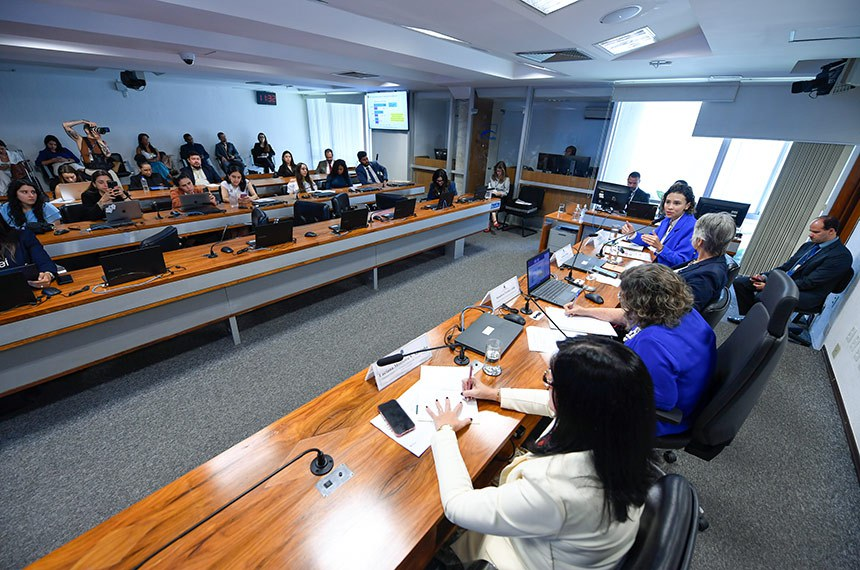
Argentina – National Food Commission holds 156th ordinary meeting
The 156th Meeting of the National Food Commission (CONAL in Spanish) was held at the headquarters of the National Ministry of Health in the City of Buenos Aires, with the participation of national authorities and jurisdictional referents from all over the country, both in person and virtually.
During the meeting, the Commission agreed to send 6 dossiers to be processed for the signing of the Joint Resolution, such as the modification of articles 235 and 1381 to incorporate health claims (HPS) in labeling, the incorporation of additives in fruits and the inclusion of dehydrated grape pomace and dehydrated apple pomace.
Five projects were referred to the Public Consultation instance, including the modification of the articles referred to outlets for meat food and the incorporation of chia mucilage, monk fruit extract, olive leaves and sake.
Finally, the committee introduced new topics to be addressed, such as the incorporation of pink pepper, pecan nut by-products, and the characterization of virgin coconut and virgin palm oils.
It was also agreed to include the proposed incorporation of regional botanicals for alcoholic beverages, canned caper leaves and the request to update articles 760 and 551, referring to labeling, among other topics.

 infoAlimentario