Colombia – Consumer organizations introduce bill to promote healthy eating measures

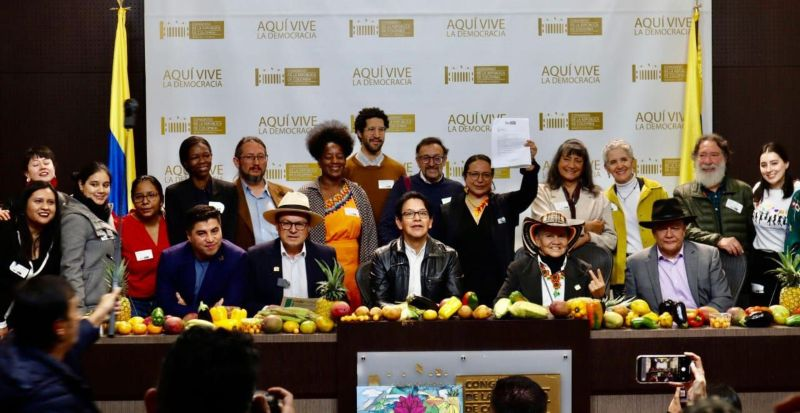
FIAN Colombia, the Tal Cual Consumers Association, RedPaPaz and the José Alvear Restrepo Collective of Lawyers, together with other social organizations, presented to the Congress of the Republic the second Bill of a package of healthy measures that seek to advance the protection and guarantee of the human right to food for girls, boys and adolescents who live in the country.

The bill seeks to create Healthy School Food Environments based on real food to free educational territories from junk food and promote real food in these settings.

Bill on Healthy School Food Environments

This bill seeks to establish guidelines for the implementation of strategies that ensure adequate food and nutrition in Early Childhood Care Services, official and non-official educational institutions, as well as those directed to the System of Criminal Responsibility for Adolescents and the Administrative Process for Restoration of Rights.
Panama – PAHO supports advances in addressing nutrition-related noncommunicable diseases

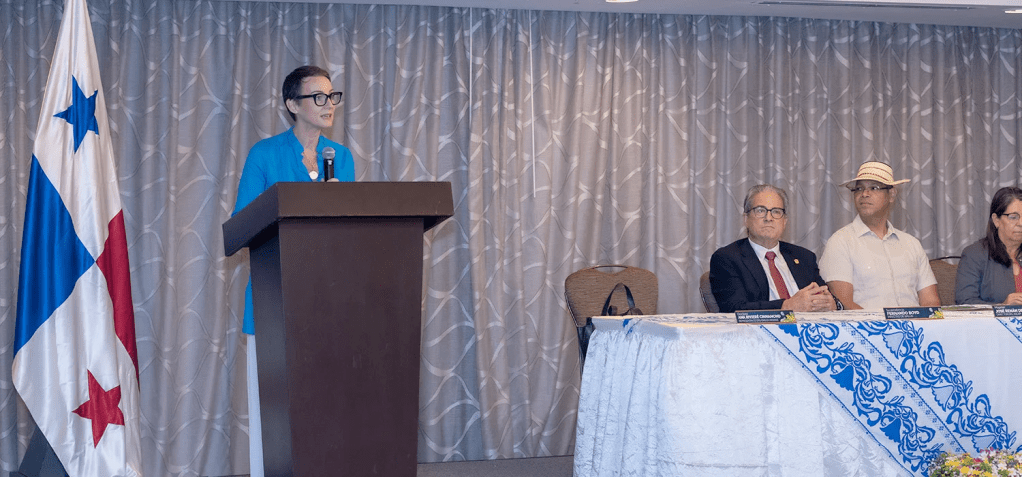
The Pan American Health Organization (PAHO), together with the Ministry of Health (MINSA) and the Institute of Nutrition of Central America and Panama (INCAP in Spanish), successfully held the INCAP 75th Anniversary Commemorative Symposium. This event brought together national and international experts to discuss innovative strategies for the prevention of nutrition-related non-communicable diseases (NCDs) in Panama.

In the Americas region, NCDs account for 80% of all deaths, of which one third could be avoided with appropriate preventive measures and healthy eating.

Increased consumption of industrial trans fats, especially when they exceed 1% of total energy intake, is linked to an increased risk of coronary heart disease and premature death. Likewise, cardiovascular diseases lead the statistics, and hypertension is one of its most prevalent risk factors, which is closely related to high sodium intake.

Chile – Nestlé files an appeal for protection against the decree that regulates a new message to promote healthy living in food advertising

The Court of Appeals of Santiago admitted for processing an appeal for protection filed by Nestlé against the Ministry of Health, for Decree No. 24 which regulates the characteristics of the message that promotes healthy lifestyle habits in food advertising, which will enter into force on April 11, 2025.

Nestlé argues that the decree is of exclusive competence of the President of the Republic and that, being a regulatory norm, it has been issued outside the constitutional framework.

The appeal for protection questions the substantial modification of the advertising message on food products, changing from a phrase promoting “moderate consumption” to one prohibiting its consumption, without justification or prior public consultation.

It considers that the change in the legend of the products, from “Prefer food with less seals” to “Avoid its consumption”, is presented as arbitrary and without technical support. It adds that no studies were presented to justify the change, which seriously affects the constitutional rights of the companies that commercialize these products, which carry out legitimate economic activities under the regulations in force.

Brazil – The High Court of Justice authorizes the importation of seeds and the cultivation of cannabis exclusively for medicinal, pharmaceutical and industrial purposes

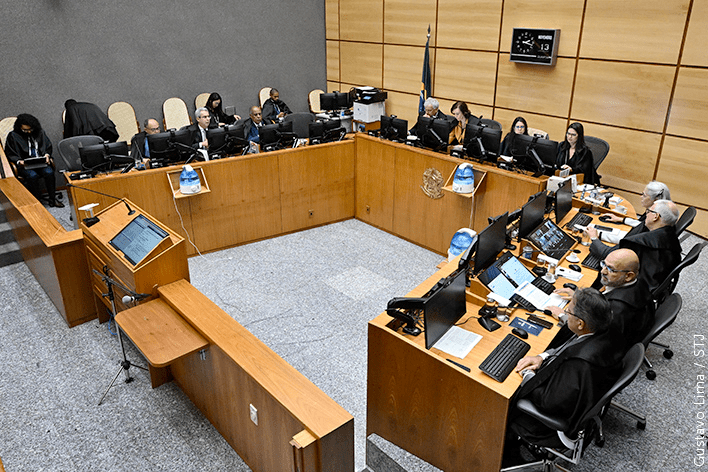
The First Section of the Superior Court of Justice (STJ in Portuguese), in , considered it legally possible to grant sanitary authorization for the sowing, cultivation and commercialization of industrial hemp – a variation of Cannabis sativa with a tetrahydrocannabinol (THC) content of less than 0.3% – by legal entities, for exclusively medicinal and pharmaceutical purposes.

For the collegiate, however, the authorization must comply with the rules that will be published, within a maximum period of six months (from the publication of the ruling), by the National Health Surveillance Agency (Anvisa) and by the Union, within the scope of their competences.

Among other reasons, the First Section considered that the low THC content present in industrial hemp eliminates the possibility of psychoactive effects and, therefore, distinguishes the plant from marijuana and other variations of cannabis used for drug production. Consequently, the panel understood that hemp is not subject to the prohibitions established in the Drug Law (Law 11.343/2006) and other regulations, and its cultivation is possible in the national territory.