Peru – The process to approve the regulations of the law on the promotion of healthy eating for children and adolescents continues

The representative of UNICEP, Javier Álvarez, and María Elena Ugaz, Early Childhood Development and Nutrition Officer of the same institution, reaffirmed the importance of approving the new Regulation of Law 30021, Law for the Promotion of Healthy Nutrition for Children and Adolescents, which establishes the placement of the warning octagons of ‘High in sugars, sodium and saturated fats’, in formulas (or replacement milks) and baby foods according to the parameters of the Pan American Health Organization (PAHO).
The proposal is being reviewed by the Ministry of Economy and Finance, which must make it viable, stressing the need to speed up its approval.

Argentina updates the list of additives used as a vehicle for vitamins and other nutrients in infant formulas

he Argentine Secretariat for Health and Quality and the Secretariat for Bioeconomy issued joint resolution No. 9/2024, amending the Argentine Codex Alimentaria, updating the list of additives used as carriers of vitamins and other nutrients in infant formula and clarifying the specific ingredients, definitions and labelling requirements for infant formula. It takes effect the day after it is published in the Official Gazette, and the transition period is 180 days.

  • Modify the definition, classification and nutritional content of infant formula
  • The formula must meet the following requirements: gluten-free, free of added fluoride (the content in readymade products shall not exceed 100ug /100kcal), lead content shall not exceed 0.01mg/kg, arsenic content shall not exceed 0.05mg/kg, etc.

Paraguay – International consultant conducted review visit of the Dietary Guidelines for School Children and Adolescents

The first technical review visit was carried out within the framework of the project for the continuation of the development of the Paraguayan Dietary Guidelines for Schoolchildren and Adolescents with the support of UNICEF, with the presence of the international consultant, Verónika Molina, to conduct the first workshop for the review of the Paraguayan Dietary Guidelines for Schoolchildren and Adolescents.

The objective of the workshop was to present the degree of progress made by the country in the situation analysis and review of scientific evidence in schoolchildren and adolescents, review the new FAO methodology for the development and implementation of Food System Based Dietary Guidelines (SFDGs), in addition to identifying information gaps to align them with the proposed methodology, define the principles of the SFDGs and adapt the Theory of Change to the national context.

Article – Nutritional labeling: historical landmarks in Colombia and the world

Nutritional labeling refers to the practice of providing information on food products. Since antiquity, these labels have evolved in tandem with industry, consumers, and government regulations. In Roman and Phoenician times, amphorae were labeled with details such as the date, place of manufacture, and the name of the responsible party. During the Renaissance, the first printed labels emerged, with their development accelerating in the 18th century due to technological advancements and regulatory requirements aimed at health standards. Food labeling is a transdisciplinary field that encompasses nutrition, food engineering, marketing, and law, among other disciplines. The objective of this reflective article was to establish a timeline describing the most significant milestones in food labeling in Colombia and globally, in order to understand the dynamics of this complex system, wherein various stakeholders engage in multiple components that interact simultaneously to comply with current regulations. The methodology employed for this reflective article involved a review of nutritional labeling through specialized databases such as Scopus, PubMed, and Scielo, as well as public institutional repositories from the ministries responsible for regulations, and other academic search engines. The research focused on identifying and analyzing relevant publications using specific keywords related to the origins, background, and history of food labeling worldwide. This reflection has thus highlighted the need for a transdisciplinary approach to responsibly develop procedures under regulations for the food industry. Such an approach aims to provide the end consumer with clear and comprehensible nutritional information about the food, thereby facilitating informed choices. Additionally, it seeks to prevent misleading or erroneous practices within food production companies, in alignment with Resolutions 810 of 2021 and 2492 of 2022 from the Ministry of Health and Social Protection; these actions are consistent with FAO guidelines on sustainable and resilient food systems, contributing to the achievement of the global 2030 Agenda’s Sustainable Development Goals. Based on historical facts and recognizing that the issues described are not yet fully resolved, ongoing needs over the years become evident. Therefore, there is a call to rethink, abstract, and redefine the Nutritional Labeling system, involving the state, industry, society, and academia.

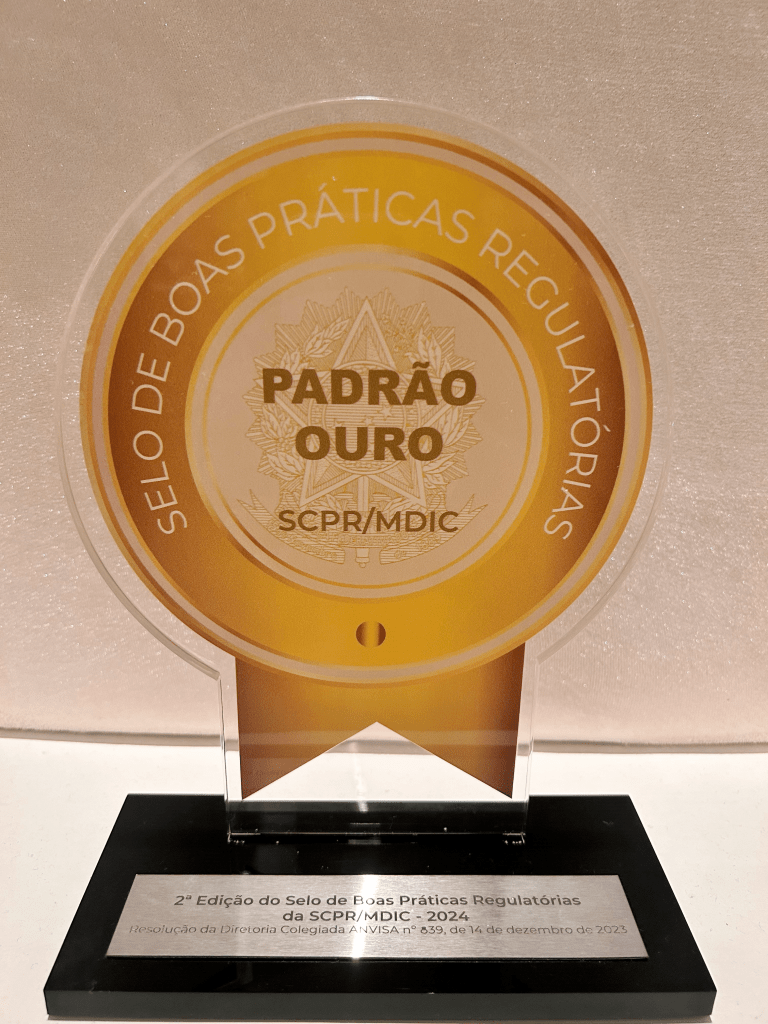
Brazil – Anvisa receives the Regulatory Quality Award for the issuance of regulations on safety and authorization for the use of novel foods and novel ingredients

The National Health Surveillance Agency (ANVISA in Portuguese) receives the Gold Seal of Regulatory Quality award for the Resolution of the Collegiate Council (RDC in Portuguese) 839, of 12/14/2023, which provides for safety testing and authorization for the use of new foods and new ingredients.

The Gold Seal is the highest classification of regulatory acts carried out by the Ministry of Development, Industry, Commerce and Services (MDIC in Portuguese), which created, in April 2023, the Seal of Good Regulatory Practices.