ANVISA releases recording of sectoral dialogue on food microbiological standards

The National Health Surveillance Agency (ANVISA in Portuguese) announced that the recording of the virtual sectorial dialogue on the process of periodic updating of the lists of food microbiological standards is available. The meeting was held by Anvisa, on 23/7.

The objectives of the meeting were:

  • To present the inputs received on the normative proposal submitted to Public Consultation no. 1.238/2024, which proposed the exclusion of the criteria for aerobic mesophiles and fungi and yeasts for foods containing microorganisms, such as probiotics and biological yeasts; and.
  • Discuss the main changes proposed by the General Directorate of Food of Anvisa (GGALI in Portuguese).

Colombia – New law on public policy focused on breastfeeding

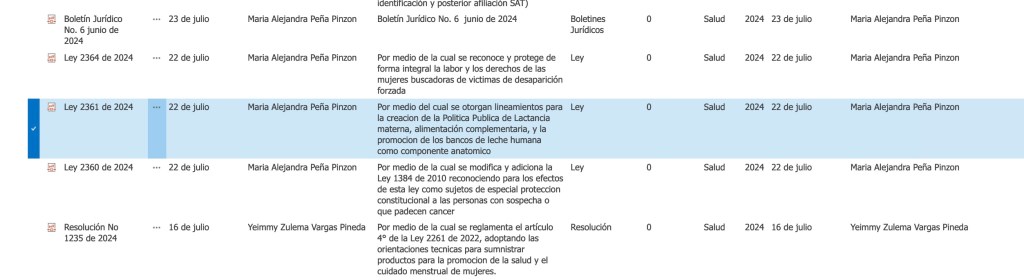
The Congress of the Republic of Colombia has enacted Law 2361 of 2024, whose purpose is to establish general guidelines for the creation of a public policy focused on breastfeeding, complementary feeding and the promotion of breast milk donation for human milk banks. This law aims to promote healthy and sustainable practices in infant nutrition at the national level.

The norm integrates key definitions, highlighting complementary feeding, which begins at six months of age and extends up to 24 months, maintaining breastfeeding. It also defines the concept of human milk banks, describing them as institutions responsible for the collection, quality control, processing, preservation, storage and distribution of breast milk for preventive, therapeutic and research purposes.

Screenshot

Colombia – New draft technical regulation to regulate the uses and maximum contents of industrial trans fats and partially hydrogenated oils in foods

The Ministry of Health has proposed the technical regulation to regulate the uses and maximum contents of industrial trans fats and partially hydrogenated oils in foods.
According to the draft regulation, packaged food products may not contain more than two grams of trans fats per 100 grams of total fat. This measure is complemented by a ban on the use of partially hydrogenated oils, both in food production and in gastronomic preparation. This change is designed to reduce the risks of cardiovascular diseases, one of the main causes of mortality in the country.
One of the highlights is the establishment of specific limits for industrial trans fats. The regulation establishes that foods may not contain more than 2 grams of trans fats per 100 grams of fatty matter. It also prohibits the use of partially hydrogenated oils in food processing.

ccording to the bill, “packaged foods shall express their trans fat content in milligrams (mg) per 100 g or mL of food and per serving of food on their labels, in the terms established in Resolution No. 810 of 2021 of this Ministry, or the rules that modify or replace it. It will also be verified that there is no mention of the use of partially hydrogenated oils in the list of ingredients”. With these indications, consumers will be able to make informed decisions about their food and promote healthier eating habits.

Brazil – Anvisa conducts user tests on new forms of food and packaging regulation

National Health Surveillance Agency (ANVISA in Spanish) has introduced new electronic forms to register and notify food and packaging to users. The forms will be implemented from September 1st of this year, when the new regulatory framework for the food sector comes into force (RDC 843/2024).

The test event with external users took place on July 18, at the Agency headquarters, where the forms and internal tests were developed. The objective was to validate the functionality of the system and obtain feedback from participants to make final adjustments.

In the tests, 13 participants from companies participated, designated by sectoral associations directly involved in the regulatory process. Users have access to the production environment of the system Request and simulate the filling of information, with technical support from the project development team.

The meeting played an essential role in identifying the difficulties faced by users and verifying the functioning of the system. Participants evaluated the moment as very relevant and productive, considering the use of the intuitive and simple system, according to expectations. All the flow behaved as expected, without critical errors that could compromise the start of use of the new forms, scheduled for September 1st.

Difficulties to complete it and suggestions for improvement will be recorded, which will be carefully analyzed regarding the feasibility of its implementation. Furthermore, questions reported by participants will be used to improve the system manual, which will be available on the Anvisa portal, with the objective of providing the best user experience to all users.
Uruguay – According to importers, digital front labeling of food will increase the final price of consumer products

A bill, approved last April by the Chamber of Deputies, establishes that all manufacturers, fractionators or importers must include digital front labeling on the packaging or label of their products.

This digital labeling must contain “sufficiently precise information” that allows the consumer to access it through an online query, for example, by reading a code through any mobile device.

Among the basic required data that must be included are: the manufacturer, the fractionator, the manufacturer, the fractionator, the importer, and the authorizations and warnings. These must match those printed on the physical label of the product, “in compliance with the current regulations for its commercialization in the national territory.”