Brazil – IDEC invites consumers to read the fine print on food and beverage labels

Campaign developed by Moringa agency focuses attention on ingredients that indicate whether a product is ultra-processed or not

The Consumer Protection Institute (Idec) takes another step in raising awareness among the population about the consumption of ultra-processed products. In the new campaign created by the agency Moringa, Idec calls on consumers to read the fine print on food product labels and pay attention to ingredients such as colorings, flavorings and sweeteners (popularly known as sweeteners). The presence of these food additives indicates that the product is ultra-processed and its consumption can be harmful to health.
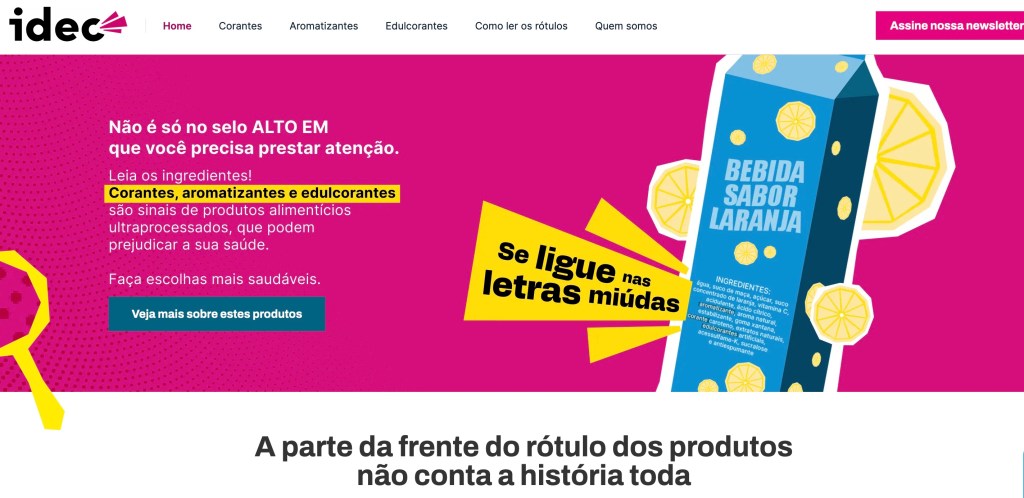
Screenshot

Brazil – Anvisa publishes second version of guide for determining food expiration dates

The National Health Surveillance Agency (ANVISA in Portuguese) made available, this Wednesday (7/03), a new comprehensive guide to guide the determination of expiration dates of foods sold in Brazil. This document, which comes into force immediately, aims to improve food safety standards and was developed based on recognized international references.

The guide establishes guidelines based on best regulatory practices, including contributions from authorities in Australia, New Zealand and the International Alliance of Dietary/Food Supplement Associations (IADSA). It also incorporates preservation technologies recommended by the Pan American Health Organization (PAHO) and the European Food Safety Authority (EFSA).

This second version of the guide was carefully revised to update terminology, improve methodologies and incorporate comments from society and experts received during the first public consultation period.

Caribbean Subregion – Healthy Caribbean Coalition works to create healthy environments through nutrition labeling

The Healthy Caribbean Coalition (HCC) is the only alliance of civil society organizations dedicated to noncommunicable diseases (NCDs) in the Caribbean sub-region, which has the highest NCD mortality rates in the Region of the Americas.
HCC has maintained official relations with the Pan American Health Organization (PAHO) since 2012. Collaboration between the two was formalized in 2020 through a series of letters of agreement that have facilitated significant achievements in several priority strategies related to NCDs in the Caribbean.
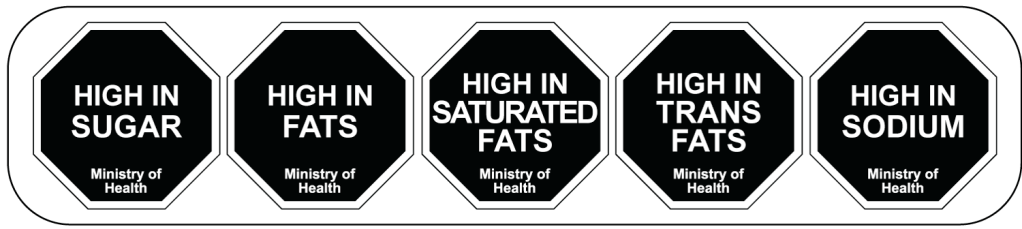
Nutrition labeling is a key area of joint work. The Caribbean subregion has long been engaged in the complex process of incorporating warning labels on the front of food products. As a strategic partner of PAHO, HCC is advocating for octagonal warning labels on the front of food products to be included in the Caribbean standard for the labeling of prepackaged foods.
As part of broader regional efforts to communicate and promote healthy food policies, PAHO and HCC have led a series of digital campaigns in several countries with regional partners such as the Caribbean Public Health Agency (CARPHA), the United Nations Children’s Fund (UNICEF), the Organization of Eastern Caribbean States (OECS) Commission, national civil society organizations and nearly 1500 individuals in the Caribbean who have expressed support for the inclusion of octagonal warning labels and have called for greater transparency and accountability in the standard setting process.

Mexico – Mexicans modify their eating habits after the implementation of the front warning label, according to study

According to the results published in the study “Self-reported decreases in selected unhealthy food purchases as a result of the implementation of warning labels in young and adult Mexican population”, published last June 14 in the medical journal International Journal of Behavioral Nutrition and Physical Activity, it is highlighted that the implementation of nutrition warning labels has reduced unhealthy food purchases in Mexico: “These results underline the potential positive impact of the labeling policy, particularly in subpopulations with lower levels of education and among indigenous adults”.
According to the results, participants reported perceived changes in their food purchases in nine different categories where nutrition warning labels were common: cola (Coca-Cola, Pepsi and others), soft drinks (Sprite, Orange Crush, Fanta, among others), diet soft drinks (Coke Zero, Diet Pepsi and others), sweetened fruit drinks (lemonade, iced tea, SunnyD, fruit punch/cocktail), candy bars, chocolate, potato chips, desserts and sweetened cereals.

Chile – New alcoholic beverage labeling law to go into effect the first week of July

The alcoholic beverage labeling law, which was published in the Official Gazette a year ago and is due to begin on July 7, has as its main objective to promote responsible alcohol consumption and reduce the associated risks.
The labeling and warnings included in the advertising will come into force on July 7, 2024 and the restrictions on advertising will come into force on July 7, 2026.
One of the most outstanding measures is the obligation to label calories on the labels of bottles with an alcohol content equal to or higher than 0.5 degrees. This change will allow consumers to have a clearer idea of the caloric impact of these beverages in their daily diet.
In addition, the law prohibits the advertising of alcoholic beverages to minors and establishes restricted time slots for their promotion in the media.

Screenshot