Argentina – Health claims on foods and drinks

The National Administration of Medicines, Foods and Medical Technology (ANMAT in Spanish) makes available to professionals and any interested person, the information to make a presentation before the Commission for the Evaluation of Healthy Property Claims (DPS in Spanish) to request a recommendation. of use for use in advertising and/or for a presentation before the competent health authority prior to the granting and/or updating of the National Food Product Registry (RNPA in Spanish).

The DPS are regulated by ANMAT Provisions No. 7730/2011 and No. 8095/2023. The regulatory framework creates the Evaluation Commission and the Protocol for the presentation and scientific evaluation of health claims.

This commission made up of ANMAT professionals belonging to the National Food Institute (INAL in Spanish) is in charge of evaluating the applications submitted by interested parties in accordance with the aforementioned protocol and issuing technical opinions.

Brazil – Commentary: Strengthening Food Labeling Policies in Brazil

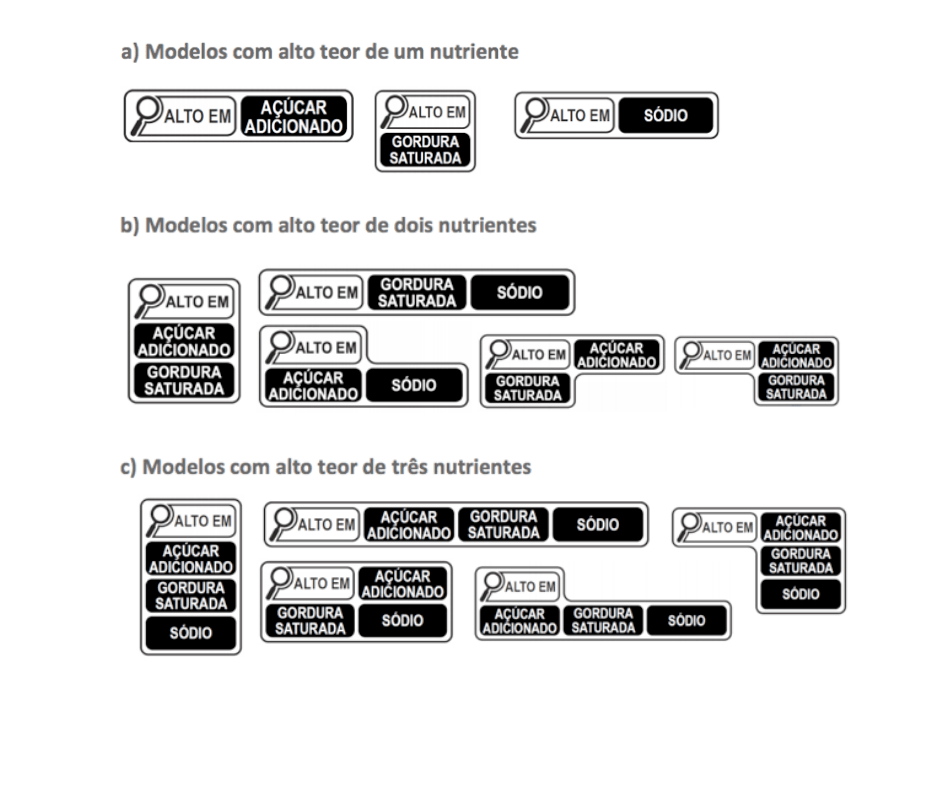
The research topic “Strengthening Food Labeling Policies in Brazil” provided an overview of food labeling policies in Brazil. Regarding the implementation of front-ofpackage nutrition labeling (FoPNL), the results discussed in the research topic suggest that the effectiveness of FoPNL systems depends on a number of factors including the design of the label, see for example, Prates et al. (1), Fernandes et al. (2), and Scapin et al. (3); and the nutrient profile model used to define which products are subject to them, see for example, Borges et al. (4), and Tomaz et al. (5). Thus, Prates et al. (1) showed that the Brazilian magnifying glass model did not perform as well as the triangular or octagonal FoPNL models, while Borges et al. (4) showed that because of the nutrient profile model adopted in Brazil, which is considerably more permissive than the nutrient profile model of the Pan-American Health Organization (PAHO), fewer products will receive FoPNL in Brazil.The aim of this commentary is to extend the discussion on the new Brazilian FoPNL regulations. Here, we will briefly comment on how Brazil missed an opportunity to make a more significant public health advance during the implementation of FoPNL by failing to learn from the experience of other Latin American countries.

Brazil – ANVISA published the Food Library document

Libraries are documents that bring together all the current standards for a given macro-topic, divided by subject. The objective is to facilitate the access and understanding of the Regulatory Stock to internal and external Regulatory Stock to internal and external audiences, as well as to improve the process of drafting and reviewing regulations.

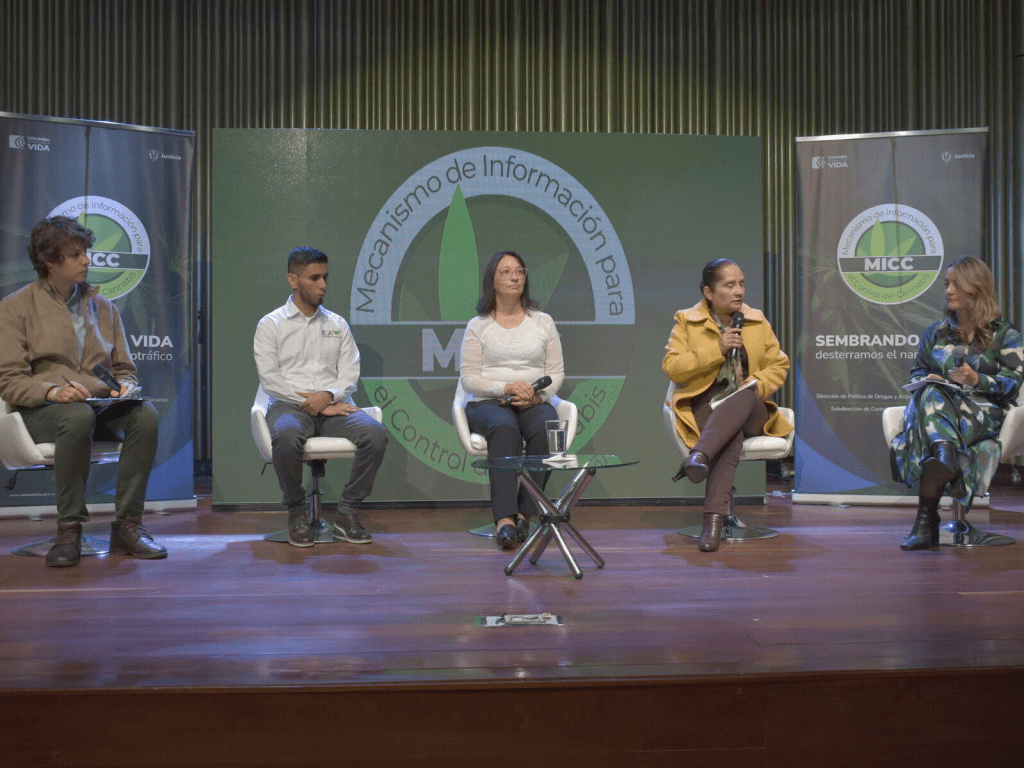
Colombia – INVIMA showcases new platform to process manufacturing licenses for cannabis derivatives

The Instituto Nacional de Vigilancia de Medicamentos y Alimentos (INVIMA in Spanish) joins the technological platform of Mecanismo de Información para el Control de Cannabis (MICC in Spanish). This tool constitutes a single platform for procedures related to license applications, modifications, quotas, general registration of activities and other procedures related to seeds for planting, grain, plant component, cannabis plants and cannabis derivatives.

In the MICC platform, Invima has an independent module, through which users can make requests for the filing of procedures related to licensing the manufacture of cannabis derivatives. In other words, this process is no longer managed through Invima’s virtual office.

  • Apply for manufacturing licenses for cannabis derivatives (in any of its 3 modalities) and manufacturing licenses for non-psychoactive cannabis derivatives (single modality).
  • Cancellation of any license.
  • Request cancellation of any procedure.
  • Renewal of licenses for the manufacture of cannabis derivatives and Licenses for the manufacture of non-psychoactive cannabis derivatives.
  • Extraordinary licenses for the manufacture of cannabis derivatives in its two modalities: for exhaustion and for non-commercial research.
  • To make extensions to the filing of applications for manufacturing licenses for cannabis derivatives and manufacturing licenses for non-psychoactive cannabis derivatives only.
  • Extend the extraordinary license for non-commercial research.
  • Modification of any license.

Paraguay – Resolution S.G. No. 614/2023. Technical regulation for labeling of allergens and sulfites in packaged foods

The National Institute of Nutrition Food (INAN in Spanish) has published Resolution S.G. No. 614/2023, by which, the Annex to Resolution S.G. No. 402, dated July 11, 2018 on the Technical Regulation that establishes requirements for the labeling of food allergens and sulfites in packaged foods is modified.