USA – More organizations call for FDA to develop mandatory front-of-package nutrition labeling

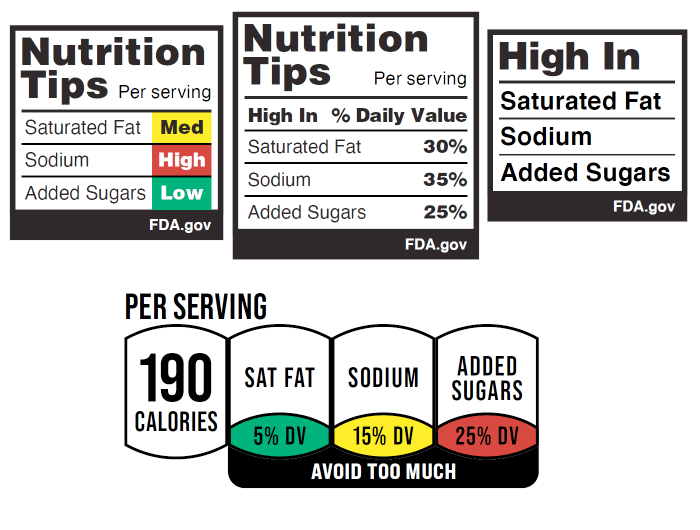
Momentum for mandatory front-of-package nutrition labeling continues to grow as new organizations are joining the effort to encourage the Food and Drug Administration to develop labels that would call attention to high levels of added sugars, sodium, and saturated fat in packaged, processed foods. And a new poll commissioned by CSPI finds strong public support for the proposal. 

The American Cancer Society Cancer Action Network, American Heart Association, American Public Health Association, Consumer Federation of America, and Consumer Reports are among 17 organizations that have filed a supportive comment with the FDA, which opened a regulatory docket in response to an August 2022 petition filed by the Center for Science in the Public Interest, the Association of State SNAP Nutrition Education Administrators, and the Association of State Public Health Nutritionists. 
USA – Register for the 2025 Dietary Guidelines Advisory Committee’s Second Meeting on May 10

The U.S. Departments of Health and Human Services (HHS) and Agriculture (USDA) will host the second full meeting of the 2025 Dietary Guidelines Advisory Committee on May 10, 2023. The meeting will be livestreamed for public viewing. Members of the public who wish to view the meeting may register on DietaryGuidelines.gov.

The departments encourage public participation in the committee’s process and opened a public comment period in January. A public comment portal will remain open throughout the committee’s deliberations and comments may be submitted online.

Article – From production to impacts on health and the environment: an analysis of food systems in Brazil, Colombia and Panama

The scope of this article is to describe the main components of the food systems of Brazil, Colombia and Panama. It involved a narrative review of the literature from 2000 to 2022, based on the concept of food systems proposed by the Committee on World Food Security. A system of agro-industrial production, monoculture, use of pesticides and exploitation of natural resources predominates in all three countries, and the area occupied by family farmers is reduced. Multinational supermarket chains dominate food distribution, essentially in large urban centers, despite the increasing search for alternative models. Advances have been made in food labeling regulation (Colombia and Brazil) and in the taxation of sugar-sweetened beverages (Panama). The predominant food systems in these countries generate a significant and negative environmental impact, favor the consumption of ultra-processed foods, high prevalence of obesity and chronic non-transmissible diseases and increase in hunger, violating the human right to adequate food.

Canada – Notice of Modification to the List of Permitted Emulsifying, Gelling, Stabilizing or Thickening Agents to Correct Conditions of Use for Food Additives in Sour Cream

In 2020, Health Canada extended the use of potassium phosphate, dibasic to the same foods and at the same maximum levels of use as was permitted for sodium phosphate, dibasic. One of the new uses for potassium phosphate, dibasic was in sour cream as was set out for sodium phosphate, dibasic in the List of Permitted Emulsifying, Gelling, Stabilizing or Thickening Agents.

This list also sets out permitted uses for certain other food additives in sour cream. For 14 of the food additives, the list sets out a condition of use in Column 3 that limits the total amount of the food additives permitted in sour cream when they are used in combination. Sodium phosphate, dibasic is excluded from this in-combination condition of use. Potassium phosphate, dibasic should similarly have been excluded when it was authorized for use in sour cream in 2020.

Also, Column 3 of the French version of the List of Permitted Emulsifying, Gelling, Stabilizing or Thickening Agents correctly set outs that carob bean gum and gelatin can each be used singly in sour cream at a maximum level of use of 0.5%. This maximum level of use for these two additives, used singly, was missing from the English version of the list.

This Notice describes the action Health Canada has taken to correct these errors by modifying the List of Permitted Emulsifying, Gelling, Stabilizing or Thickening Agents, effective March 31, 2023.

USA – FSIS Extends Comment Period on Proposed Rule for Voluntary “Product of USA” Labeling Claim

FSIS is extending the comment period on the proposed rule for a voluntary “Product of USA” labeling claim. Published on March 13, 2023, the deadline for comments was originally May 12, 2023. The proposed rule will be open for comments for an additional 30 days until June 11, 2023.

As announced in the March 10, 2023, Constituent Update, FSIS proposed new regulatory requirements to better align the voluntary “Product of USA” claim with consumers’ understanding of what the claim means. The proposal allows the voluntary “Product of USA” or “Made in the USA” claim to be used only on FSIS-regulated products that are derived from animals born, raised, slaughtered, and processed in the United States.

FSIS is extending the comment period in response to requests from an industry association and a foreign country for additional time to determine and formulate comments on the impact of the proposed regulations.

Comments may be submitted through the federal eRulemaking portal or by mail, sent to Docket Clerk, U.S. Department of Agriculture, Food Safety and Inspection Service, 1400 Independence Avenue SW, Mailstop 3758, Washington, D.C., 20250-3700. All items submitted by mail or electronic mail must include the agency name and docket number FSIS 2022-0015.