Mexico / UNICEF: Front-of-package food labeling protects children and must be maintained

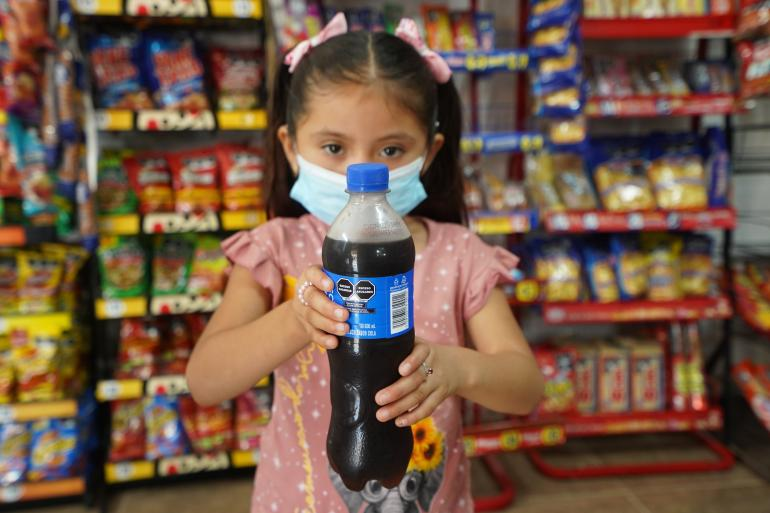
The front labeling used in Mexico, proven to be one of the best in the world as it is simple, prominent and easy to interpret, should be defended as a mechanism to guide consumption and protect children and adolescents from environments that increase the propensity to obesity and related diseases, said UNICEF, the United Nations Children’s Fund.

Peru: INDECOPI fines company for omitting information on GMO ingredient

The Resolving Body of Summary Proceedings for Consumer Protection N°3 (OPS3) of the National Institute for the Defense of Competition and Protection of Intellectual Property (INDECOPI in Spanish) sanctioned the company Mondelez Perú S.A., importer and marketer of the product called “Bubbaloo Sparkies”, for not having complied with the labeling stating that it contained genetically modified or transgenic components, such as starch.

Through Final Resolution No. 1385-2022/PS3, the resolution body decided to impose a fine of 3.49 UIT (Unidades Impositivas Tributarias), equivalent to 16,054 soles, for having infringed Article 37 of the Consumer Protection and Defense Code.

Brazil/Article – Food Sovereignty and Security in Latin America: A Look at Legal and Conceptual Frameworks

The concepts of Food Security and Sovereignty are marked by different meanings and strategies for their implementation, including controversial components. In Latin America, there are numerous challenges to achieving Food and Nutrition Security (FNS) and so, achieving Food Sovereignty. Considering the relevance of the creation of regulatory frameworks in such countries, and the significance of regional articulation to overcome these challenges, the aim of this article is to both, identify and describe the legal and conceptual frameworks on Sovereignty and FNS, in Latin America. This study has been developed through a qualitative approach. Google has been used as a search tool for the national regulatory frameworks, by combining different keywords. It has been noted that, in the region, the existence of legislation on FNS is a key factor, where 32 out of the 33 autonomous Latin American countries have set national regulatory frameworks, or action plans to deal with FNS. As for the concepts of FNS, Food Sovereignty, and Food Systems, they appear prominently in the legislation of the region, including Food Insecurity (FI). Finally, the identification of multiple perspectives on the subject in the region should be acknowledged as a strength that shelters the diversity of expressions of resistance and cultural resilience of traditional food systems, and not as a barrier to the construction of cooperation initiatives.
Article – The challenges of front-of-package labeling in Brazil

The Brazilian legal system has plenty of mechanisms to ensure the public right to access clear information. The Federal Constitution (FC), enacted in 1988 and known as the “Citizen Constitution,” has as its principle to guarantee the right to human dignity. Protection of consumers, as well as their inviolable right to life and safety, are guaranteed by the FC as basic rights. The FC limits the country’s economic order when establishing that its goal is to provide dignity for all Brazilians. Therefore, economic development cannot put people at risk, and its processes must be aligned with principles of goodwill and balance between consumers and suppliers. Collectively, FC establishes that health, food, and youth protection are social rights; hence, the government is responsible for providing policies for its implementation.

Colombia – Council of State urges Ministry of Health to regulate Law 2120 on healthy food environments

The Council of State warned of the existence of an imperative and unobjectionable mandate, in the head of the Ministry of Health, to regulate the technical parameters of the front labeling which incorporates a warning seal that all edible or drinkable products classified according to the level of processing with excessive amount of critical nutrients established by this portfolio must have, for which it must be based on the best scientific evidence available and free of conflict of interest, which may take into account that provided by the WHO.

“Council of State. Contentious-Administrative Chamber. Fifth Section. “According to the Ministry’s statement, which accepts and complements the Court’s decision, the duty to regulate is seen to have been fulfilled by: (i) the issuance of Resolution 810 of July 16, 2021; (ii) the steps taken to review and modify said resolution in consideration of the new guidelines contained in Law 2120 of 2021 and”……